
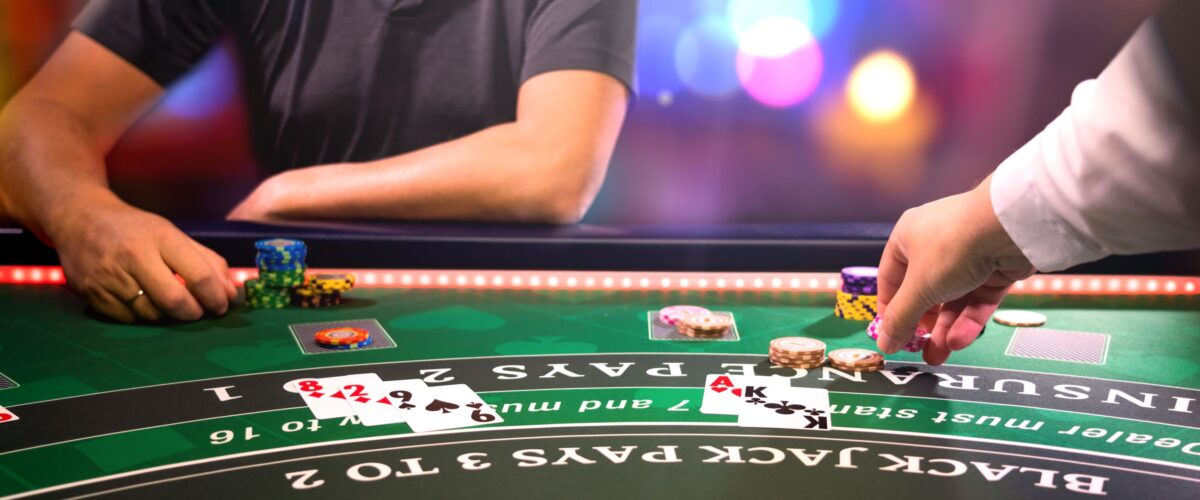
Blackjack is arguably the most popular casino card game in the world, largely because it balances simple rules with deep strategic complexity. While the objective of getting closer to 21 than the dealer without going bust sounds straightforward, the reality of consistent play involves understanding probability, reading game states, and mastering specific decision-making protocols. The most common mistake novice players make is treating the casino floor as their training ground. This approach is costly and often leads to bad habits born from desperation rather than sound logic.
The smartest way to bridge the gap between novice and proficient player is through deliberate practice without financial risk. By utilizing free resources, you can internalize the core mechanics of the game, test betting strategies, and develop the mental discipline required to play under pressure.
Why Practice Matters Before You Bet
Even though the game is based on math, it is not purely mechanical. You are constantly making decisions—hit, stand, double down, or split—based on the cards you are dealt and the dealer’s visible card. If you do not have the basic strategy memorized, you are essentially guessing. Over time, guessing increases the house edge significantly. When you practice, you are training your brain to recognize patterns. You move from the slow, analytical process of deciding what to do to an intuitive, reflexive style of play. This transition is essential for maintaining composure when you eventually move to real-money games.
Utilizing Free Online Blackjack Platforms
The internet is saturated with free blackjack simulators. These are perhaps the most accessible tools for practice. Most online casinos offer a demo mode, or you can find dedicated gaming sites that provide free play without requiring registration or financial deposits.
When choosing a platform to practice, prioritize those that mimic the rules of your preferred live casino. Not all blackjack games are identical. Rules regarding the number of decks used, whether the dealer hits on soft 17, and the payout ratios for blackjack significantly impact your strategy. Ensure the free game matches these parameters so that the habits you build are transferable.
Mobile Applications for On-the-Go Training
If you have a commute or downtime throughout the day, mobile applications are excellent for incremental practice. There are several high-quality apps designed specifically for blackjack training. Unlike standard casino apps, these trainers often include features that provide immediate feedback.
For instance, if you make a move that deviates from the mathematically optimal play, the app will pause and highlight the correct move. This form of “active correction” is much more effective than simply playing rounds and hoping you get better. You want to find an app that allows you to customize the rules to match the table conditions you plan to play in eventually.
Tabletop Simulation at Home
You do not need a computer or phone to practice effectively. In fact, practicing with physical cards is often superior because it forces you to practice manual dexterity, chip handling, and the mental math of counting multiple cards at once.
Purchase a standard deck of playing cards and, if you have them, some inexpensive poker chips. You can deal for yourself, representing both the player and the dealer. This allows you to practice “playing the game” rather than just clicking buttons. It also helps you understand the speed of play, which can be intimidating in a busy casino environment. Practice dealing from a shoe if you have one, or simply shuffle and deal from your hand. Keep a cheat sheet next to you initially, but gradually try to rely on your memory until you no longer need the reference.
Incorporating Basic Strategy Charts
Basic strategy is the mathematical foundation of blackjack. It is a set of rules that tells you exactly what to do in every possible situation, depending on your hand total and the dealer’s up-card. You should never start practicing without one.
To effectively use these charts, break them down into segments. Do not try to memorize the entire table at once. Start with hard totals, then move to soft totals, and finally tackle pairs. Once you feel comfortable with each category individually, practice them in random order. The goal is to see a card combination and know the action immediately. If you have to pause for more than two seconds to decide, you are not ready for a real table.
The Importance of Bankroll Management Simulation
Practicing the game is only half the battle. The other half is practicing how to manage your money. Even when you are playing for free, you should act as if the chips have real value.
Divide your practice sessions into sessions representing specific bankroll amounts. If you have a virtual bankroll of 500 units, do not play recklessly. Practice deciding how much to bet based on the table minimums and your overall pool. This teaches you to walk away when your bankroll hits a certain loss limit or to exit when you have reached a target profit. Without this discipline, you may be a skilled card player but a poor gambler, which leads to the same outcome: losing money.
Recording and Reviewing Your Decisions
If you are serious about improvement, keep a log of your practice sessions. Note the situations where you consistently struggle. Perhaps you always find yourself hesitating when dealt a pair of eights against a dealer’s nine. Recognizing these “pain points” allows you to focus your study sessions more effectively. Reviewing your decisions after a session—perhaps by re-enacting a difficult hand—helps solidify the correct strategy in your long-term memory.
Mastering Your Mindset
The psychological component of blackjack is often overlooked. When playing with real money, the pressure of losing can force players to abandon their strategy in favor of “chasing losses” or making emotional, impulsive bets. By practicing frequently without money on the line, you become desensitized to the ebb and flow of the game. You learn that a losing streak is just a statistical inevitability rather than a personal failure. This detachment is the hallmark of a successful player. Use your practice time to cultivate this emotional neutrality so that when you eventually play in a high-stakes environment, your decision-making remains cold, calculated, and accurate.
Frequently Asked Questions
Does practicing with free games guarantee I will win in a real casino?
No. Free games help you master basic strategy and reduce the house edge to the minimum possible percentage. However, casinos always retain a statistical advantage in the long run. Practice makes you a more skilled player, but it does not change the fundamental nature of the game as a form of gambling.
How many hours of practice are recommended before playing for money?
There is no fixed time, but you should aim for proficiency. You are ready when you can play for two hours straight without making a single deviation from basic strategy. Speed and accuracy are more important than total hours spent.
Should I practice counting cards while playing for free?
It is not recommended for beginners. First, master the basic strategy perfectly. Card counting requires significant mental effort and is only effective if you already know the correct mathematical move for every hand. Focus on the core mechanics before attempting advanced techniques.
Are there differences between online free play and live casino rules?
Yes. Online simulations may use random number generators that differ slightly from the physical shuffling of decks in a casino. Furthermore, rule variations like “dealer stands on soft 17” or the number of decks used are critical. Always check the specific rules of the table you are “practicing” for to ensure the simulation matches reality.
Can I practice with friends to improve my game?
Yes, practicing with friends is highly effective. One person can act as the dealer while the other practices their moves. This introduces a social element that prepares you for the distractions found in a real casino environment, such as conversations with the dealer or other players.
What is the most common mistake players make when practicing?
The most common mistake is skipping the difficult parts of the strategy. Players often avoid the scenarios they find confusing, like doubling down or splitting certain pairs. To be effective, you must specifically practice the scenarios that make you the most uncomfortable until they become second nature.
Does practicing help with the speed of play?
Absolutely. Casinos value speed because it keeps the game flowing. By practicing, you develop a rhythm that allows you to play comfortably and confidently. This helps you avoid the nervous hesitation that often signals to more experienced players or pit bosses that you are a novice.